
Wire Once: How to Plan a Smart Home Before the Drywall Goes Up
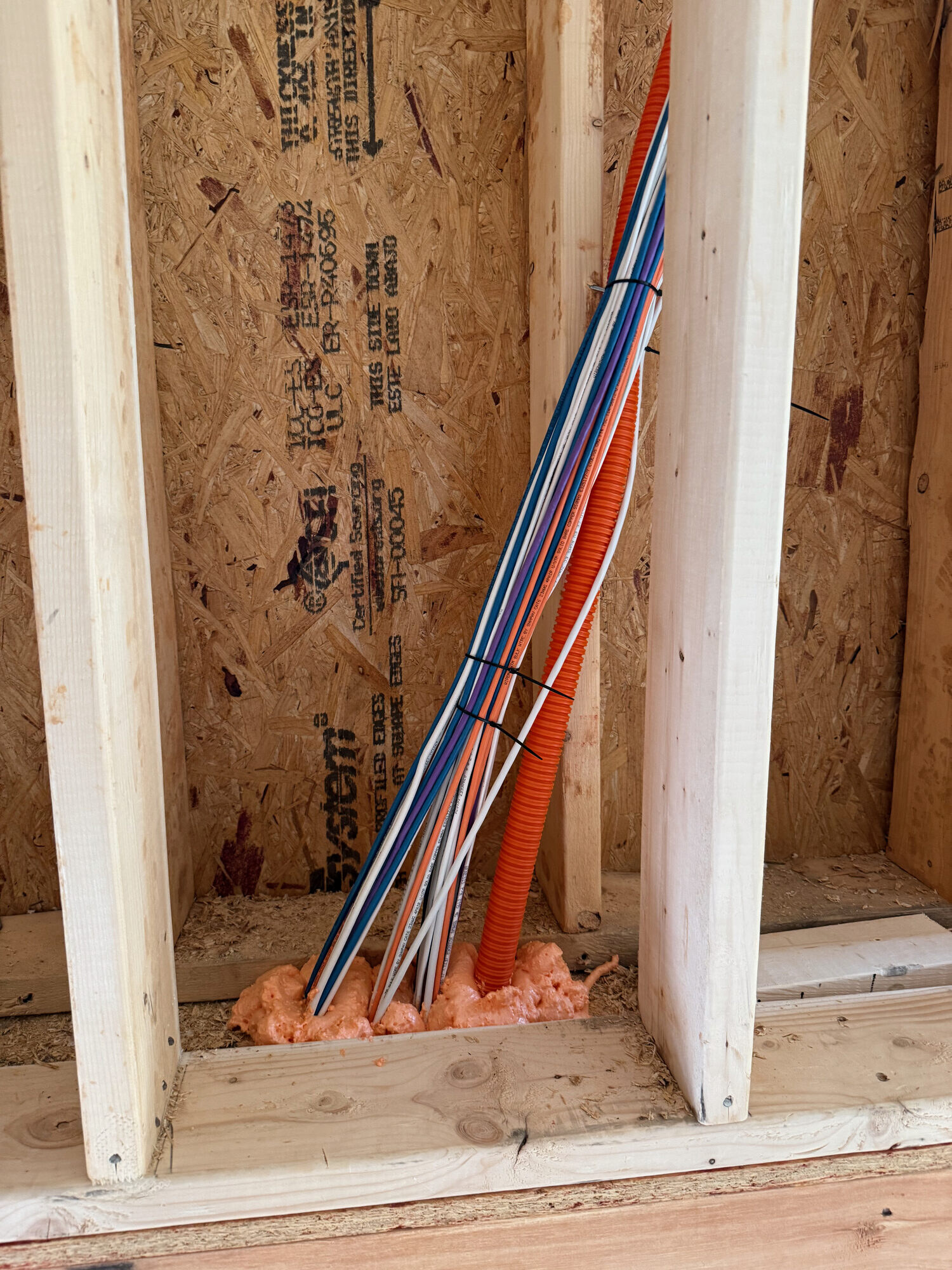
There's a short window in every build when a smart home costs almost nothing to plan. It opens when the framing goes up. It closes the day the drywall does. Miss it, and every wire you wish you'd run becomes a small renovation.
That's the part most people get backwards. They treat technology as something you add to a finished house, like furniture. The systems that make a home feel effortless live inside the walls, and drywall goes up once.
The drywall is a deadline
Before drywall goes up, a cable is a few dollars and ten minutes. After, that same cable means cutting open finished surfaces, fishing through insulation, patching, repainting, and explaining to the homeowner why a brand-new house needed surgery six weeks after move-in.
The technology itself rarely moves the budget. The timing does. We design alongside the architect and builder from the first set of plans, so the infrastructure is part of the house instead of a patch stapled on top of it.
Everything easy happens before the drywall. Everything expensive happens after.
Five wires to run before drywall: the smart home prewire list
You don't have to choose every device now. You do have to leave room for them. These five are the ones that hurt to add later:
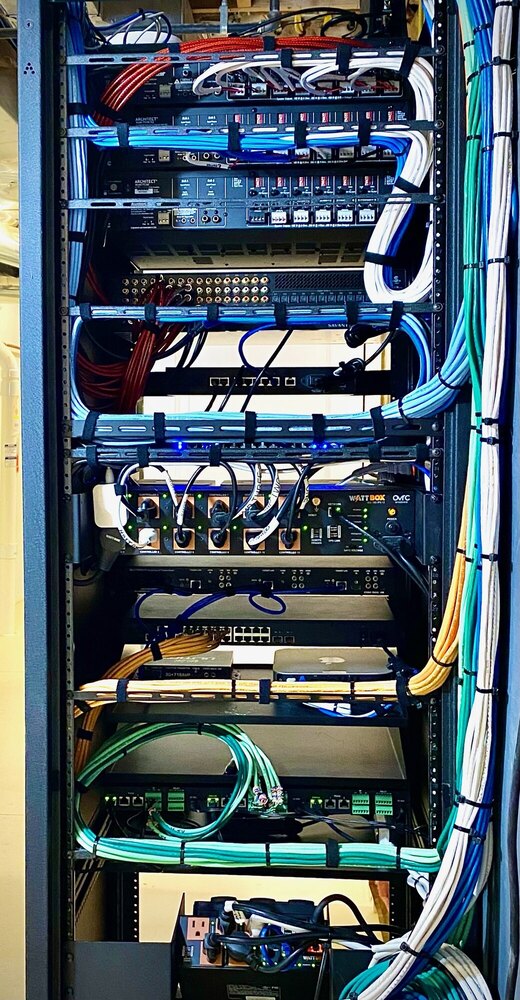
- Structured wiring to a central panel. One clean home-run location where the network, AV, and control all terminate. It's the spine everything else hangs on.
- Conduit to the hard spots. Empty flexible conduit to the attic, the media wall, and the exterior. It's the cheapest insurance in the build: a pull-string for whatever comes next.
- A real network backbone. Hard-wired Cat6 to every room and every wireless access point. Wi-Fi is only ever as good as the cable feeding it.
- TV and speaker locations, pre-decided. Power and data where screens and in-ceiling speakers will live, placed against the furniture plan instead of guessed at later.
- Shade power at the windows. A small lead at the window head costs nothing during framing and saves a battery-and-ladder conversation for the next decade.

Design for the life, not the gadgets
The best plans don't start with a product list. They start with how the house gets used. Where the morning happens. Which rooms host. What "goodnight" needs to do, room by room. Get that right and the wiring follows naturally, because you're running cable toward a life, not toward a catalog.
One partner, one schedule
Low-voltage touches every other trade. It rides the electrician's rough-in, respects the framer's timeline, and lands behind the painter's finish. When one partner is accountable for the whole scope, the gaps close. When it's five vendors and a hopeful builder, the gaps are exactly where the problems live.
A home wired with intent never announces itself. The shades rise. The lights settle. The call after closing comes to us, not to you. That's the whole case for doing it once, and doing it early.